
VapiCon is back November 11-12! Tickets now available•Register Now

Customer stories
432X
Faster speed-to-lead
250K+
Monthly calls
24/7
Coverage
“"Ten years from now, what's not going to change? A lot is coming, but speed isn't going to change. If you can get a package delivered faster, you're going to win. We're not implementing AI to reduce cost. We know speed wins, and if we can deliver a candidate to a client faster, they're always willing to pay more for it."”
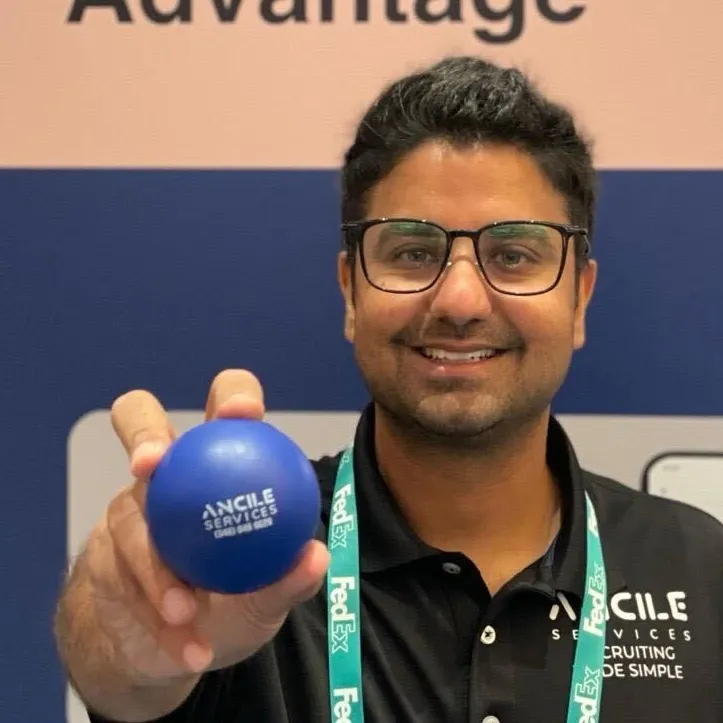
Ronak Shah, Co-Founder and CEO
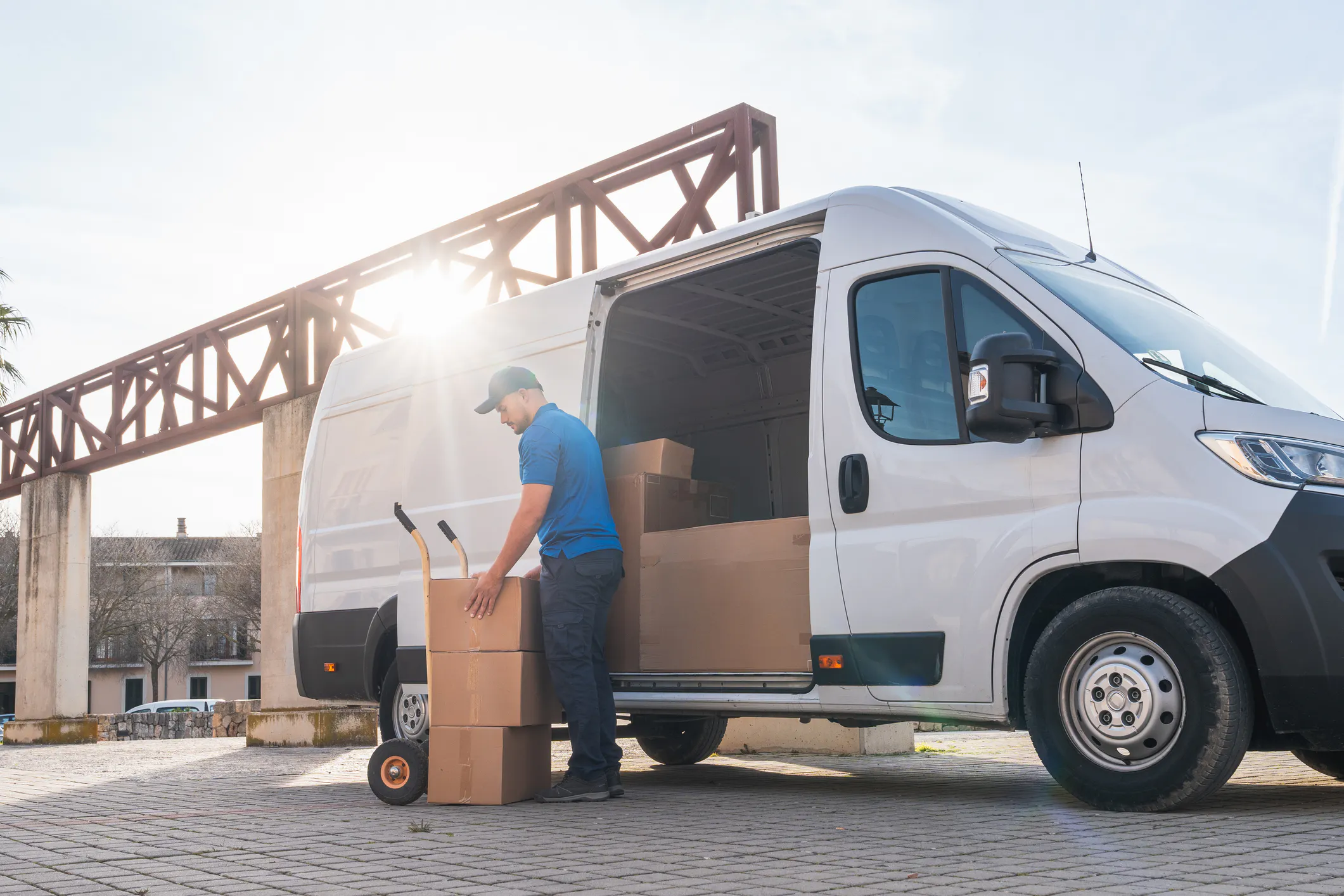
The E-commerce boom in the US over the past decade has given rise to last-mile delivery service providers. Most such delivery services are contracted out to small business owners. Each of these 1000s of businesses owns a set of zip codes known as a contracted service area (CSA), and has to put a driver in every truck, seven days a week. Turnover is constant, and a replacement can't touch a package until they've cleared the required background checks, MVRs, drug tests, and in most cases, DOT Physicals. Contractors who can't keep the seats filled start missing routes, and that territory eventually goes to a contractor who can.
Ancile Services is who those contractors call to fill seats fast. Ancile recruits and screens delivery drivers for last-mile delivery fleets, such as FedEx Ground ISP’s, Amazon DSP’s, Ontrac, SpeedX, and other local courier service companies.
One such delivery driver applicant recently called Ronak Shah, Ancile's co-founder and CEO, to ask whether the company was real. He had submitted an application, and his phone rang 30 seconds later. He assumed it was a scam. It wasn’t. It came from a Vapi voice agent, not a recruiter.
A contractor with an open route doesn't need a good candidate next month. They need one now, and whoever reaches that candidate first fills the route. Speed-to-lead is the value that Ancile Services sells, and now, thanks to Vapi, they can consistently reach applicants faster than anyone else.
"Speed will always win," Ronak said. "If you're the fastest to get to that candidate, you're going to win no matter what."
Ancile exists because its founder had the problem first.
In 2020, Ronak bought 19 routes out of the 311 terminal in Austell, Georgia. He cashed out his 401(k) and put his house on the line to do it. Then COVID hit, and those 19 routes became 35 overnight. Headcount had to go from roughly 25 people to 46 in a matter of weeks, because a seven-day operation needs 25 to 30% more crew than routes to cover the schedule.
"You need people, good trucks, and capital allocated to those two things," Ronak said. "It's a three-legged stool. And what we figured out pretty quickly is that this is a recruiting problem."
He couldn't buy his way out of it. Recruiting services, paid ads, and walk-ins all produced inconsistent results. So he built the driver recruitment solution himself and sold off his routes.
Today, Ancile is the largest recruiter in the last-mile delivery space, working with contractors across 48 states, and Ronak's co-founder Ajay Pandey runs the technology behind it.
Every driver must clear a background check, Motor Vehicle Record (MVR), pass a drug test, pass a DOT physical, and pass a Road test before they can work. That check covers MVR history, employment history, criminal history, and residence history going back ten years. It takes anywhere from 5 to 15 business days.
Nothing starts until someone talks to the candidate. A recruiter has to reach out, confirm they'll pass the check, score them against the job, and get the background check link into their hands. Every hour of delay pushes the placement date out by an hour and gives a competitor a chance to reach the same person first.
Ancile's best-case human response time was 18 hours from application. Not because the recruiters were slow, but because a hundred applications arriving at once can only be worked in sequence, and candidates who apply at 9 pm on a Saturday wait until Monday.
"There are a hundred leads that apply. I can have a hundred agents concurrently calling and vetting those candidates," Ronak said. "I could never have enough humans to do that."
Building the voice layer in-house was the first option Ancile ruled out.
"Instead of building something from scratch and taking longer to go to market, we wanted to find the right partner who had already done it," Ronak said. "Let us stay in the lane we need to stay in and focus on the problem at hand, instead of solving a problem that's already been solved."
The team evaluated several platforms, including ElevenLabs and Retell AI, and built prototypes on more than one. Vapi’s platform stood out in 3 key areas.
Flexible and open. Screening a driver only helps if something happens at the end. Ancile needed an agent that takes action in their own systems, not just fields calls. The screening process is complex, with lots of disparate systems. Vapi’s open API made it easy to plug in the tools and systems Ancile needed. Ancile's team spent the build on their own recruiting logic instead of on the voice plumbing underneath it.
Concurrency. This was the whole reason for the project. Ancile's ceiling was never demand; it was how many candidates a room full of recruiters could call in an hour. Vapi lets Ancile place hundreds of simultaneous calls. Vapi agents scale seamlessly as Ancile receives more and more candidates.
"There are a hundred leads that apply. I can have a hundred agents concurrently calling and vetting those candidates. I could never have enough humans to do that."
"You have to touch these candidates multiple times to remind them. The agent is doing all the follow-ups, keeping the applicants on track."
Underneath it all is the thing Ronak was really buying: a platform Ancile could grow into rather than out of. Today, the agent screens delivery drivers. The one it runs in two years may be screening line cooks and warehouse staff.
The Vapi agent runs the candidate funnel end to end, inbound and outbound.
It picks up or places the first call within minutes of an application. It confirms the candidate's driving and work history against the job description and determines whether they'll clear the background check. It scores each candidate on a 100-point scale. A human then reviews this for consistency and fit and, if needed, has a follow-up conversation with the candidates. Once we know the candidate is a great fit for the customer, we initiate the background check. Then the agent handles the follow-up calls, because a candidate typically needs several touches before the check is actually complete. The real work starts then, as candidates have multiple questions and need constant nudges along the way so they don't fall off the process.
A human still reviews the work, so that their team knows how to improve the agent when they ship a new version.
"We'll always need the human in the loop," Ronak said. "To look at it, assess it, and evaluate it, so the AI agent gets better."
432X faster speed-to-lead. Average time from application submitted to candidate contacted went from 18 hours to 2.5 minutes, measured against their previous human baseline.
Coverage went to 24/7. An application at 9 pm gets a call at 9:01 pm.
Concurrency & capacity solved across 250,000 monthly calls. Ancile can now run as many concurrent screening calls as applications require.
Time-to-placement down. Reaching the candidate sooner starts the 5 to 15 day background check sooner.
In the six months since the agent went into production, Ancile was able to raise its prices across the business by 10% while introducing new packages that offer higher candidate placement volume guarantees.
"We were able to raise our prices in the last six months because the results are faster and better. Clients are getting candidates faster. That’s a significant value they are willing to pay a premium for."
The near-term goal is to get the agent running across the remaining client base. The bigger one is turning into its own product.
Today, Ancile sells a service delivered by a management, recruiting, and engineering team. The plan is a self-serve AI recruiter, sold as packages, priced on output. A contractor picks how many drivers they need and buys the package, with no people layer in between.
After that, Ancile’s serviceable market expands. Today, Ancile owns the last-mile space. Tomorrow, the rest of the logistics industry. After that, the same pattern applies to any low-wage, high-turnover industry, restaurants and warehouses included, where somebody needs a shift covered today and the fastest recruiter wins.
Because of the flexibility of Vapi’s platform, none of that requires a new voice platform.
"Once we build something on top, we're just changing what the agent says and how it says it. It's super simple. Whatever we go into next, we're building that on Vapi."